

It was 10:00 AM on a Tuesday, and the coffee shop was empty.
I don’t mean quiet. I mean empty. The barista was wiping a counter that was already clean. The three “laptop warrior” tables by the window were vacant. Outside, the bike lane... painted a crisp, optimistic green... was devoid of bikes.
This is a neighborhood that urban planners dream about. It has a Walk Score of 92. It is a textbook “15-Minute City,” designed so that your grocery store, your gym, your park, and your “Third Place” are all within a gentle quarter-hour stroll.
So where is everyone?
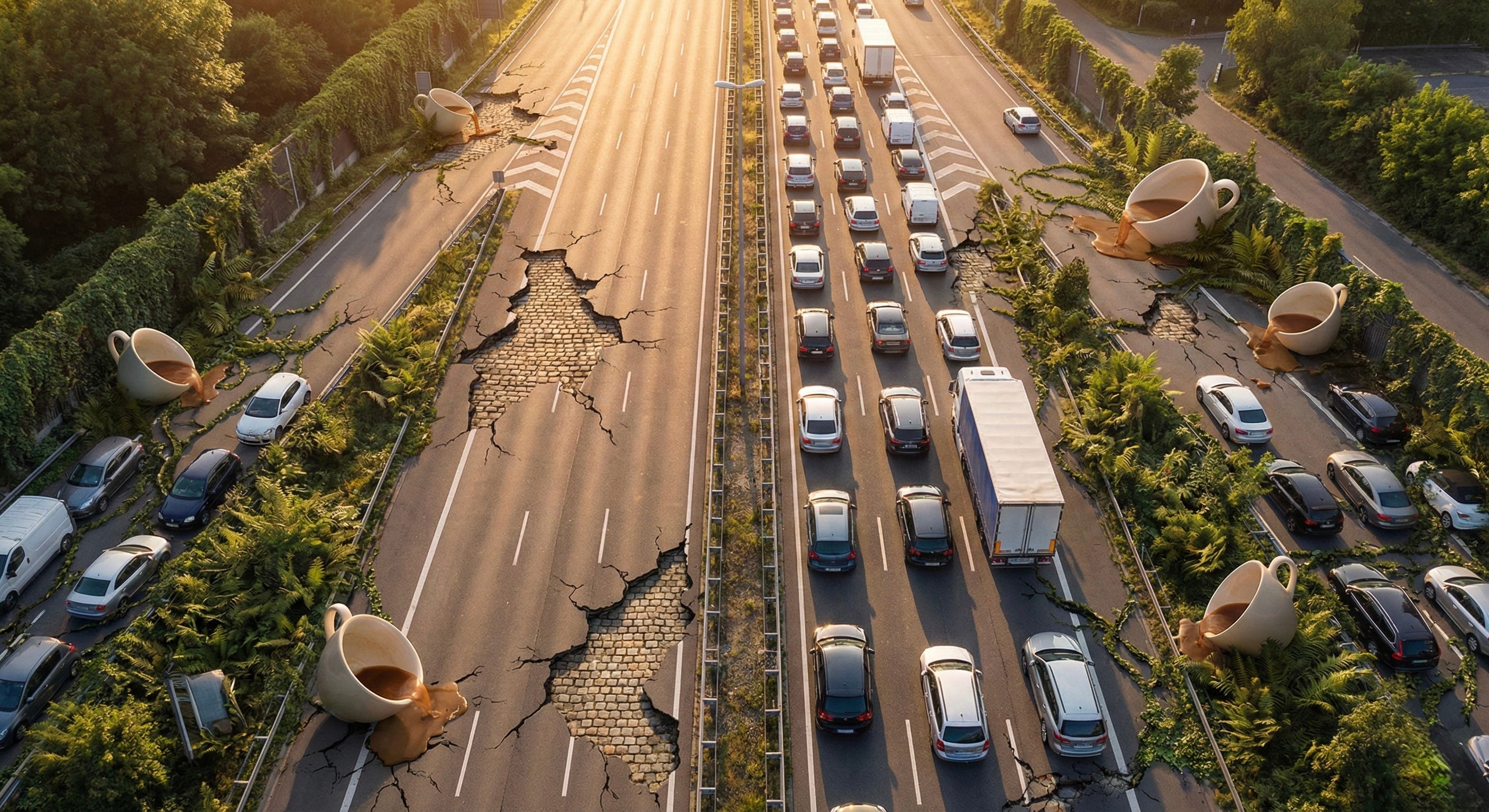
They are on the 405. They are on the I-80. They are gridlocked on the Bay Bridge.
We are living through a massive, invisible collision between two systems that are moving in opposite directions. On one hand, city planners have spent the last decade building infrastructure for hyper-local living. On the other, corporate leadership has spent the last year mandating hyper-mobility.
We designed the city for humans. Then we ordered the humans to leave.
The Architecture of Friction
The concept of the 15-Minute City, popularized by Carlos Moreno, is simple: decentralize the city. Instead of a massive downtown core where everyone converges (creating traffic) and then flees (creating ghost towns), every neighborhood becomes a self-sustaining node.
It is a beautiful, resilient system. It reduces carbon, increases community, and lowers blood pressure.
But a system only works if the components... us... are allowed to use it.
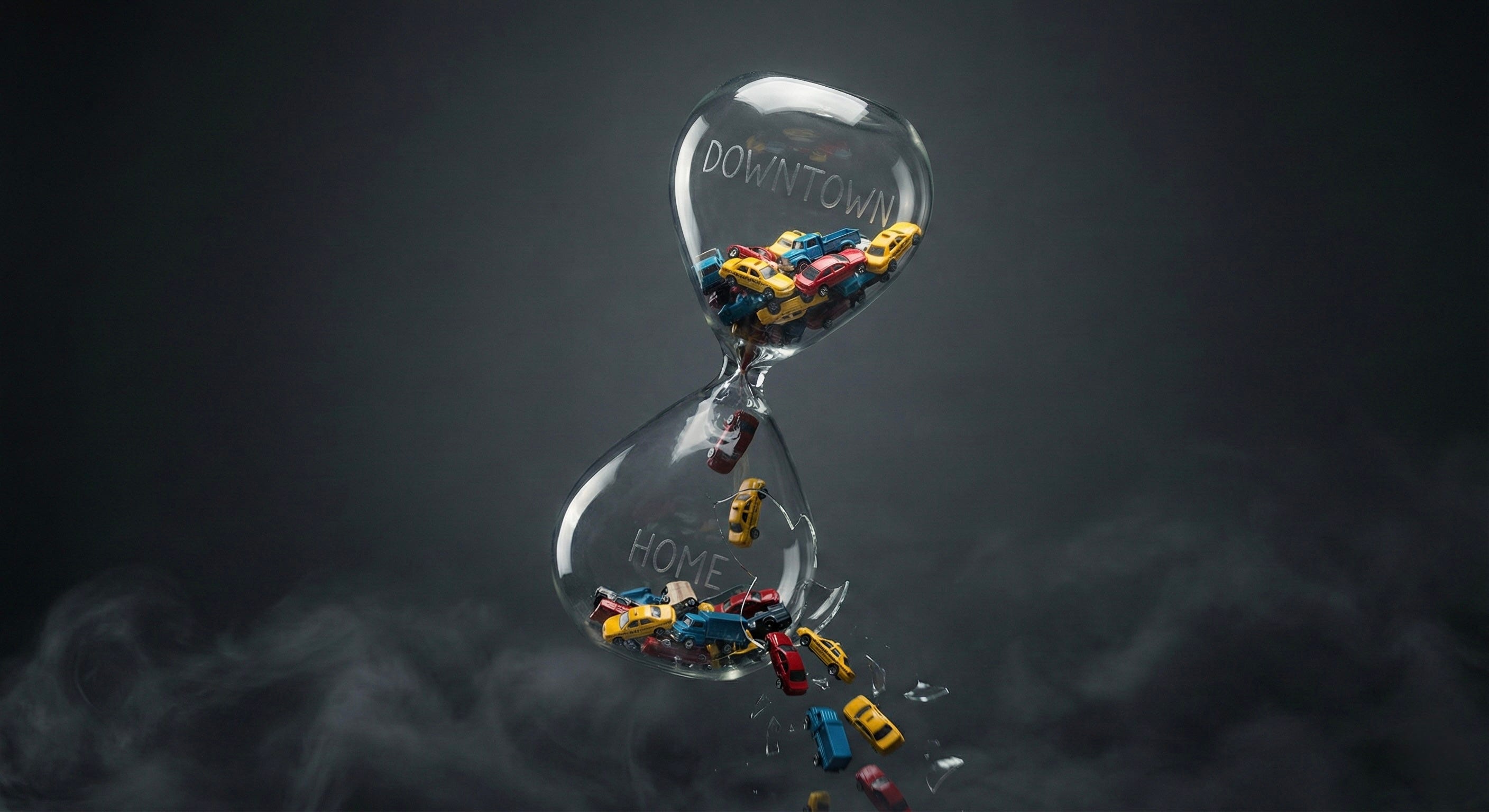
When a company mandates a Return to Office (RTO) for a role that can be done remotely, they are effectively breaking the local circuit. They are taking the resident out of the 15-minute loop and forcing them into the 90-minute loop.
The result is a friction point that is tearing the fabric of our neighborhoods.
The local deli closes because the lunch crowd is gone; they are eating $18 salads in the financial district again. The neighborhood gym loses members because nobody has the energy to lift weights after sitting in traffic for two hours. The bike lane remains empty because you can’t bike 45 miles to the HQ.
The Death of the Third Place (Again)
Sociologist Ray Oldenburg coined the term “The Third Place” to describe the anchors of community life that are neither Home (First) nor Work (Second). Cafes, bookstores, barber shops, dive bars.
These places rely on “dwell time.” They rely on people having the surplus energy and time to linger.
The Commute is the natural predator of the Third Place.
If you leave your house at 7:00 AM and return at 7:00 PM, exhausted, mentally fried, and needing to cook dinner, you do not go to the local pub. You do not browse the bookstore. You collapse.
We saw a genuine resurgence of these local spots in 2021 and 2022. It was that brief, golden window after the lockdowns lifted and the fear finally broke, but before the corporate summons returned. For a moment, we were free to move, but we didn’t have to leave. The commute time was converted into community time. We reclaimed those two hours of life and spent them locally. We invested in our neighbors instead of our gas tanks.
Now, as the cars line up on the freeway, we are watching that investment evaporate. We are trading the vitality of our communities for the optics of a cubicle.
The Great Misalignment
This is the “Morphic” view: looking at the misalignment between our tools and our rules.
We have the technology (fiber optics, 5G, VR, Zoom) to live locally and work globally. We have the physical infrastructure (walkable districts, mixed-use zoning) to support a vibrant, human-scale life.
We have the hardware for paradise. But we are running the software of 1990.
We are choosing to use our fiber optic cables to watch Netflix instead of work. We are choosing to use our walkable streets as parking lots for commuter vehicles.
It creates a cognitive dissonance. You walk past the empty park on your way to the garage to get in the car to drive to a building to sit on a Zoom call with a guy who lives three blocks away from you.
Re-Inhabiting the Ghost Town
I ordered my coffee. I tipped well. I sat in the window.
A few minutes later, a man walked in. He looked harried, checking his watch, grabbing a to-go cup. He wasn’t staying. He was refueling for the transit.
I wanted to tell him to sit down. I wanted to say that the city exists right here, in this room, in this silence. But he was already gone, pulled away by the gravity of the Second Place.
If we want to save our cities, we don’t need more bike lanes. We don’t need more zoning laws. We need permission to inhabit the spaces we have built.
We need to stop commuting to the past.
Validated Resources
The 15-Minute City Concept - Official overview from C40 Cities on the urban planning model designed for hyper-local living.
Ray Oldenburg: The Great Good Place - Project for Public Spaces summary of Oldenburg’s “Third Place” theory and why it matters for democracy.
The Commute vs. Community Data - Bloomberg analysis on how remote work shifted economic activity from downtown cores to residential suburbs.
This perfectly captures the absurdity of current urban policy. The part about converting commute time into community time during 2021-2022 hit home for me, I started going to my local bookshop every morning and now it closed becuase everyone's back on the freeway. It's wild how we're literally choosing to abandon the infrastrucure we spent decades building.